


Welcome to Moorestown Smile Center

Scaling & Root Planing in Moorestown, NJ Stop Gum Disease Before It Costs You Your Teeth

Bleeding gums, bad breath that will not go away, teeth that feel loose — these are warning signs of gum disease, not just poor hygiene. Scaling and root planing is the non-surgical deep cleaning that stops periodontal disease in its tracks. Dr. Aliya Khan uses precise, comfortable techniques to restore your gum health and protect your teeth for years to come.

Non-Surgical

No cutting or stitches
Comfortable

Fully numbed procedure

1-2 Visits

Split by quadrants

Bone Preservation

Prevents Tooth Loss

Reverses early gum disease
What is scaling and root planing?

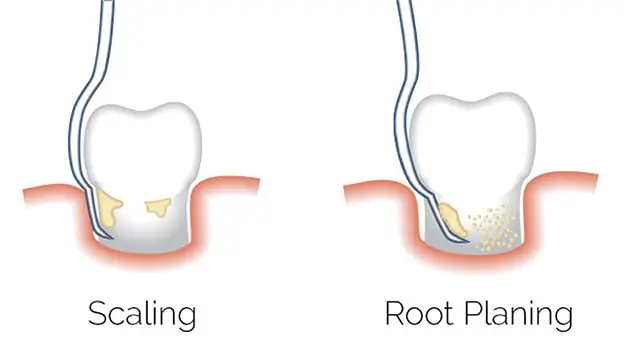
Scaling and root planing is a non-surgical deep cleaning procedure used to treat gum disease. Scaling removes plaque and tartar from above and below the gum line, while root planing smooths the root surfaces of teeth so gums can reattach and prevent bacteria from accumulating again. It is the gold-standard first-line treatment for early to moderate periodontal disease.

Why Gum Disease Deserves Serious Attention

Gum disease known clinically as periodontal disease is the number one cause of tooth loss in adults. It rarely announces itself with pain. Instead, it quietly progresses through bleeding gums, persistent bad breath, and gum recession until teeth begin to loosen or shift. By the time most patients notice, significant damage has already occurred.

The good news: caught early enough, gum disease is completely reversible with scaling and root planing. This deep cleaning removes the bacterial buildup that causes the inflammation, gives your gums a chance to heal and reattach to your teeth, and prevents the progression to advanced periodontitis where surgery or tooth loss become the only options.

What is scaling and root planing?

47.2%

Of adults over 30 have some form of gum disease

According to the CDC, nearly half of American adults have some level of periodontal disease and 70% of adults over 65. Most do not know they have it. Regular periodontal exams and prompt treatment are the only reliable way to catch and reverse it.

Who Benefits from Dental Sealants?

Sealants are most commonly applied to children and teens, but adults with deep grooves or a history of cavities also benefit significantly. Here is how Dr. Khan evaluates candidates:

Bleeding gums when brushing or flossing

Red, swollen, or tender gums

Persistent bad breath or bad taste

Gums that are pulling away from teeth (recession)

Teeth that look longer than they used to

Loose or shifting teeth

Pus around teeth or gums

Changes in your bite or how teeth fit together

💡 Bleeding gums are never normal

Many patients dismiss bleeding gums as "just something that happens." It is not. Healthy gums do not bleed not when brushing, not when flossing, not ever. If your gums bleed regularly, it is the earliest and most treatable warning sign of gum disease. Address it now with scaling and root planing, or address it later with far more invasive treatment.

Understanding the Two Parts of the Procedure

Scaling and root planing is actually two connected treatments performed together. Each step serves a specific purpose in stopping and reversing gum disease:

Scaling

Dr. Khan carefully removes plaque and hardened tartar (calculus) from tooth surfaces both above the gum line and, importantly, from deep pockets beneath the gum line where a regular cleaning cannot reach.

  • Uses ultrasonic and hand instruments
  • Removes bacterial biofilm at the source
  • Reaches areas below the gum line
  • Eliminates the cause of inflammation

Root Planing

The rough surfaces of tooth roots  exposed by receding gums or deep pockets are gently smoothed. This helps the gums reattach firmly to the teeth and makes it harder for bacteria to grip and rebuild.

  • Smooths root surfaces
  • Encourages gum reattachment
  • Reduces pocket depth over time
  • Prevents rapid bacterial return

The Stages of Gum Disease Where You Are Matters

Gum disease progresses in stages. Scaling and root planing is highly effective in the first two stages; advanced cases may need surgical treatment:

ngivitis (Reversible)

Gums are red, swollen, and bleed easily. No bone loss yet. Fully reversible with scaling, root planing, and improved home care. This is the ideal time to act.

Early to Moderate Periodontitis (Manageable)

Gums have begun pulling away from teeth, forming pockets. Some bone loss has started. Scaling and root planing typically stops progression and allows healing. This is when most patients are diagnosed.

Advanced Periodontitis (Serious)

Deep pockets, significant bone loss, loose or shifting teeth. Scaling and root planing may still help, but surgical intervention or tooth loss becomes likely. Prevention is far easier than recovery at this stage.

Notice bleeding or receding gums? Book a periodontal evaluation.

Why Choose Scaling and Root Planing Over Surgery

Non-Surgical Approach

No incisions, no stitches, no surgical recovery. Scaling and root planing preserves your tissue while treating the disease at its bacterial source.

Reverses Early Disease

Caught in gingivitis or early periodontitis, this procedure alone often reverses gum disease completely restoring healthy pink gums and eliminating bleeding.

Protects Your Teeth

Gum disease is the leading cause of adult tooth loss. Treating it non-surgically at this stage is often the single most important step you can take to keep your natural teeth for life.

The Stages of Gum Disease Where You Are Matters

Gum disease progresses in stages. Scaling and root planing is highly effective in the first two stages; advanced cases may need surgical treatment:

Periodontal Exam & X-Rays

Dr. Khan measures gum pocket depth around each tooth and reviews X-rays to check for bone loss. This diagnostic step confirms the stage of gum disease and how much treatment is needed.

Local Anesthesia

The treatment area is fully numbed for complete comfort. Most patients feel nothing during the procedure other than mild vibration from the ultrasonic instruments.

Scaling & Root Planing by Quadrant

The mouth is typically divided into four quadrants. Dr. Khan treats two quadrants per visit carefully cleaning plaque and tartar from below the gum line and smoothing root surfaces. Each visit takes 60-90 minutes.

Follow-Up Evaluation

4 to 6 weeks after treatment, Dr. Khan re-measures pocket depths to assess healing. Most patients see significant improvement. A maintenance schedule is then established typically cleanings every 3 to 4 months to keep gum disease from returning.

Scaling and Root Planing vs. Regular Cleaning

Many patients ask why a regular cleaning is not enough. Here is the critical difference:

Factor

Regular Cleaning

Scaling & Root Planing

Purpose

Preventive maintenance

Treats active gum disease

Reaches below gum line

Minimally

Yes deep beneath

Anesthesia

Not needed

Yes local numbing

Time required

30-45 minutes

60-90 minutes per visit

Number of visits

1 visit

1-2 visits

Root surface smoothing

No

Yes

Recommended frequency

Every 6 months

Once, then 3-4 month maintenance

Recommended for

Healthy gums

Bleeding, receding, or infected gums

⚠ What happens if gum disease is left untreated

Untreated gum disease does not go away on its own. It progresses often silently until the bone supporting your teeth is destroyed. Teeth become loose, then shift, then fall out. Research also links untreated periodontal disease to heart disease, diabetes complications, and stroke risk. Scaling and root planing is one of the most impactful health interventions in dentistry. If Dr. Khan recommends it, do not delay.

Recovery & Aftercare

Recovery is straightforward, but the care you give your gums in the weeks after treatment determines whether the results last. Follow these guidelines closely:

Expect mild soreness for 2-3 days gum tenderness, minor bleeding, and sensitivity to hot or cold are normal. Over-the-counter pain relievers manage this easily

Eat soft foods for 24-48 hours yogurt, soups, smoothies, mashed potatoes. Avoid crunchy, spicy, or acidic foods while gums heal

Rinse gently with warm salt water 2-3 times daily helps soothe gums and reduce bacteria. Skip alcohol-based mouthwashes for the first week

Brush and floss carefully use a soft-bristled brush and gentle technique around treated areas. Do not skip flossing it is more important than ever

Attend maintenance cleanings every 3-4 months not every 6. Patients who have had gum disease need more frequent professional care to keep it from returning

Serving patients from across Burlington County and South Jersey:

Dr. Khan’s patients travel from across Burlington County and Camden County to Moorestown Smile Center at 740 Marne Hwy, Suite 106. The practice is conveniently located for families throughout:

Office Information

Address

740 Marne Hwy, Suite 106 Moorestown, NJ 08057

Phone

(856) 638-5266

Email

moorestownsmilecenter@gmail.com

Hours

Mon 9:00 am – 6:00 pm
Tue 7:00 am – 6:00 pm
Wed 9:00 am – 5:00 pm
Thu 9:00 am – 6:00 pm
Fri 8:00 am – 12:00 pm

Book With Dr. Khan

New patients from Moorestown, Cherry Hill, Mount Laurel, and Burlington County always welcome. Same-day appointments often available.

Insurance Accepted

Request an Appointment

We’re here to help you achieve a healthy, confident smile. Fill out the form, and we’ll get in touch with you shortly.


    Frequently Asked Questions About Dental Sealants

    Scaling and root planing is a non-surgical deep cleaning procedure used to treat gum disease. Scaling removes plaque and tartar from above and below the gum line, while root planing smooths the root surfaces of teeth so gums can reattach and prevent bacteria from accumulating again.
    No. Local anesthesia is used to numb the treatment area so you feel no pain during the procedure. Mild soreness and gum sensitivity for a few days afterward is normal and usually managed with over-the-counter pain relievers.
    Scaling and root planing is typically completed in one or two visits at Moorestown Smile Center. Each visit takes 60 to 90 minutes. The mouth is often divided into quadrants, with two quadrants treated per visit for maximum comfort.
    regular cleaning removes plaque and tartar above the gum line and is preventive. Scaling and root planing goes beneath the gum line to remove buildup from tooth roots and treat active gum disease. It requires anesthesia and typically takes longer than a routine cleaning.
    Most patients need scaling and root planing once to treat active gum disease. After that, maintenance cleanings every 3 to 4 months (rather than the standard 6 months) are typically recommended to keep gum disease from returning.

    PATIENT EXPERIENCES

    What Our Patients Are Saying

    Scroll to Top